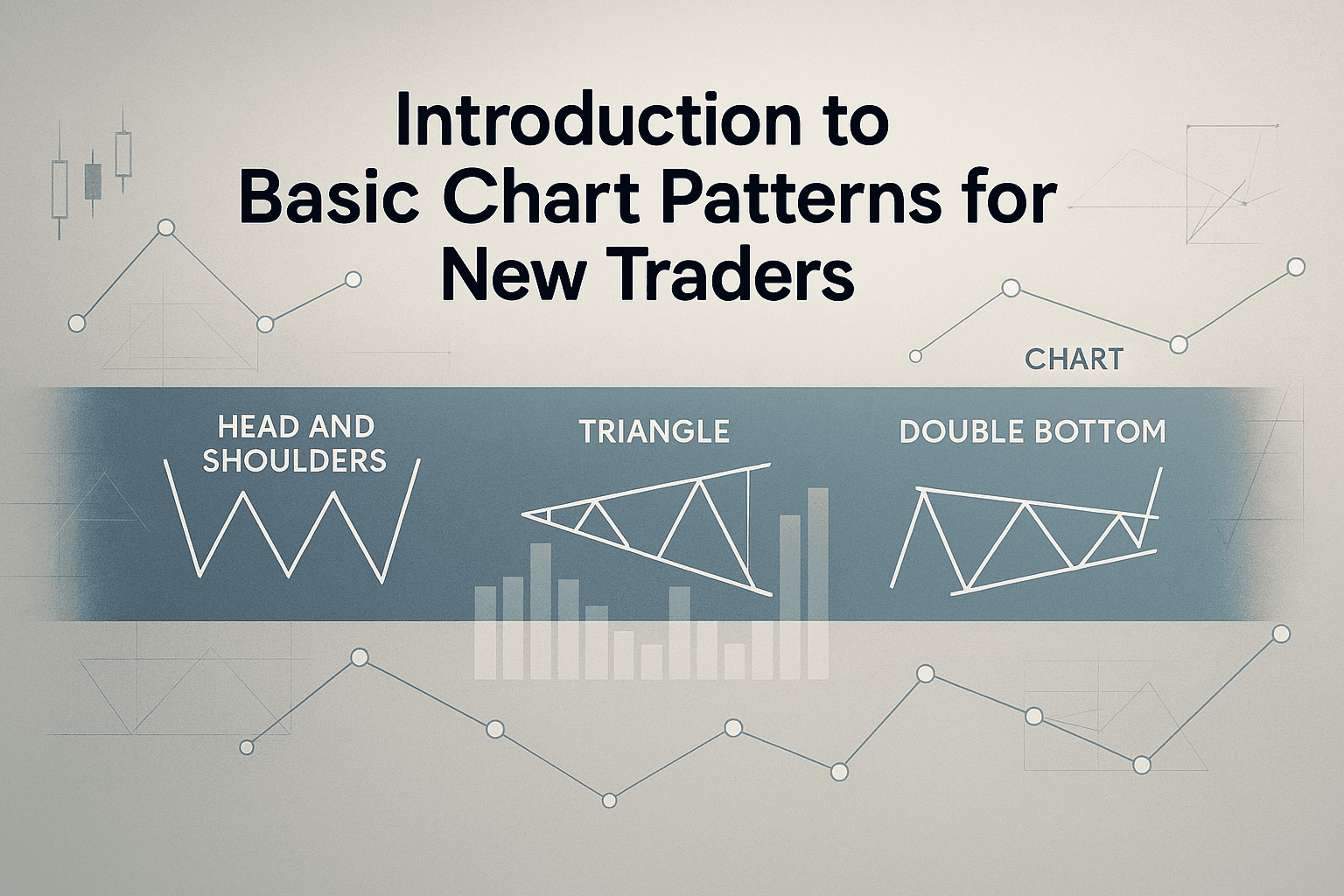
Introduction to Basic Chart Patterns for New Traders
Price charts visually represent the battle between buyers and sellers. Over time, certain shapes or 'patterns' tend to form, often indicating potential future price movements. Recognizing these patterns is a fundamental skill in technical analysis.
Why Learn Chart Patterns?
- Identify Potential Reversals: Spot when a trend might be ending.
- Spot Potential Continuations: Recognize when a trend is likely to resume after a pause.
- Set Price Targets: Patterns often provide measurable price objectives.
- Improve Entry/Exit Timing: Find better points to enter or exit trades.
Common Reversal Patterns
These patterns suggest a trend is likely to change direction.
- Head and Shoulders (Bearish): Looks like a baseline with three peaks – the middle peak (head) is highest, flanked by two lower peaks (shoulders). Suggests an uptrend may reverse downwards.
- Inverse Head and Shoulders (Bullish): The opposite of the above, suggesting a downtrend may reverse upwards.
- Double Top (Bearish): Two distinct peaks at roughly the same price level, indicating resistance. Suggests an uptrend may reverse.
- Double Bottom (Bullish): Two distinct troughs at roughly the same price level, indicating support. Suggests a downtrend may reverse.
Common Continuation Patterns
These patterns suggest a trend is likely to continue after a period of consolidation.
- Triangles (Ascending, Descending, Symmetrical): Price action converges within trendlines. The direction of the breakout often follows the preceding trend.
- Flags and Pennants (Bullish/Bearish): Short-term patterns forming after a sharp price move, resembling a flag or pennant on a flagpole. Suggest the prior trend will resume.
- Rectangles (Bullish/Bearish): Price moves sideways between parallel support and resistance levels. A breakout usually continues the prior trend.
How to Use Chart Patterns
- Confirmation: Don't trade based on a pattern alone. Look for confirmation from other indicators (like volume or RSI).
- Volume: Breakouts from patterns are more reliable if accompanied by increased volume.
- Context: Consider the overall market trend and context.
- Practice: Use a demo account to practice identifying and trading patterns.
Conclusion
Chart patterns are visual tools that reflect market psychology. Learning to spot them can provide valuable clues about potential price direction. Remember, no pattern is foolproof, but incorporating them into your analysis can significantly enhance your trading strategy.