Artemis II Splashdown: What Space Mission Precision Teaches Us About Trading Excellence
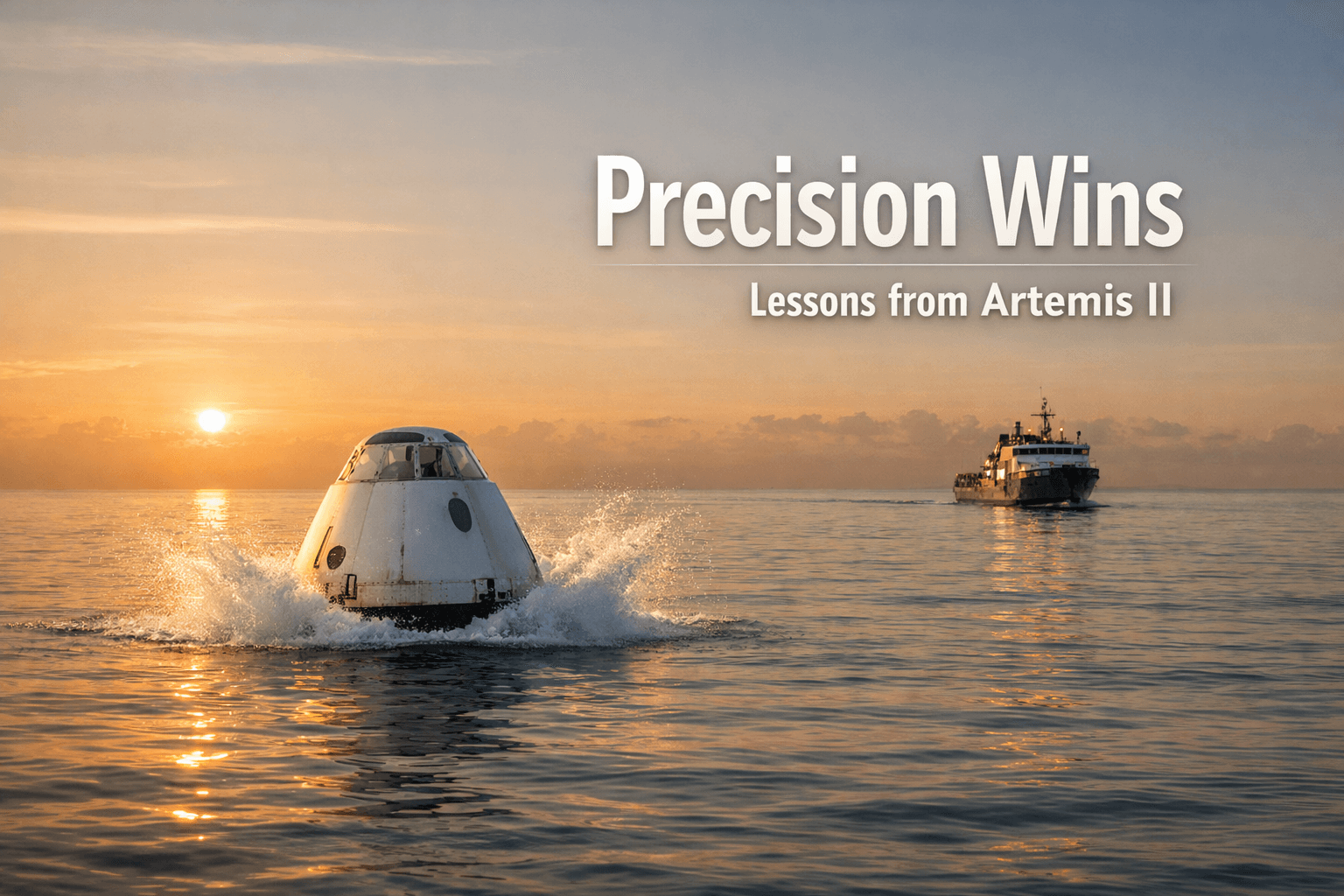
On April 10, 2026, the world watched as NASA's Artemis II mission successfully concluded with a precise splashdown off the coast of San Diego at 8:07 p.m. EDT. The Orion spacecraft, carrying astronauts Reid Wiseman, Victor Glover, Christina Koch, and Canadian astronaut Jeremy Hansen, completed humanity's first crewed journey around the Moon in over 50 years.
While this represents a monumental achievement in space exploration, the mission's execution offers invaluable lessons for traders and financial professionals who operate in their own high-stakes environment where precision, risk management, and flawless execution determine success or failure.
The Re-Entry Sequence: A Master Class in Precision Execution
The Artemis II re-entry sequence demonstrates the level of precision that separates success from catastrophe—a principle traders know intimately:
7:33 p.m. EDT: The crew and service modules separated, with the service module designed to burn up harmlessly in the atmosphere. In trading terms, this is like cutting losses on a position that has served its purpose—decisive, planned, and without hesitation.
7:53 p.m. EDT: Orion entered Earth's atmosphere at 400,000 feet, traveling at 35 times the speed of sound (approximately 24,500 mph). The spacecraft entered a planned six-minute communications blackout as plasma surrounded the capsule during peak heating.
For traders, this communications blackout mirrors those critical moments during major market events when information flow becomes unreliable, and you must trust your preparation and risk management protocols. Just as NASA couldn't adjust Orion's trajectory during those six minutes, traders often face periods where they must trust their pre-planned strategies without the ability to react to new information.
8:03 p.m. EDT: Drogue parachutes deployed at 23,400 feet, slowing velocity to 479 feet per second.
8:04 p.m. EDT: Main parachutes deployed at 5,400 feet, reducing velocity to less than 200 feet per second.
8:07 p.m. EDT: Successful splashdown.
The entire sequence unfolded with split-second timing. A single miscalculation—deploying parachutes too early or too late, entering at the wrong angle—could have been catastrophic. Similarly, in trading, timing execution within tight parameters often determines whether a strategy succeeds or fails.
Risk Management: NASA's Framework Applied to Trading
NASA's approach to the Artemis II mission embodies principles that every trader should embrace:
1. Multiple Contingency Plans
NASA designed the Artemis II return trajectory to ensure that any debris from the service module wouldn't pose hazards to land, people, or shipping lanes. They prepared for scenarios ranging from perfect execution to various failure modes.
Trading Application: Successful traders don't just plan for their ideal scenario. They have clearly defined responses for:
- Trades that go immediately against them
- Unexpected volatility spikes
- System failures or connectivity issues
- Black swan events that invalidate their analysis
Before entering any position, ask yourself: "What's my contingency plan if this assumption proves wrong?"
2. Predefined Exit Points
Orion's parachute deployment altitudes weren't suggestions—they were precisely calculated trigger points based on extensive testing and simulation.
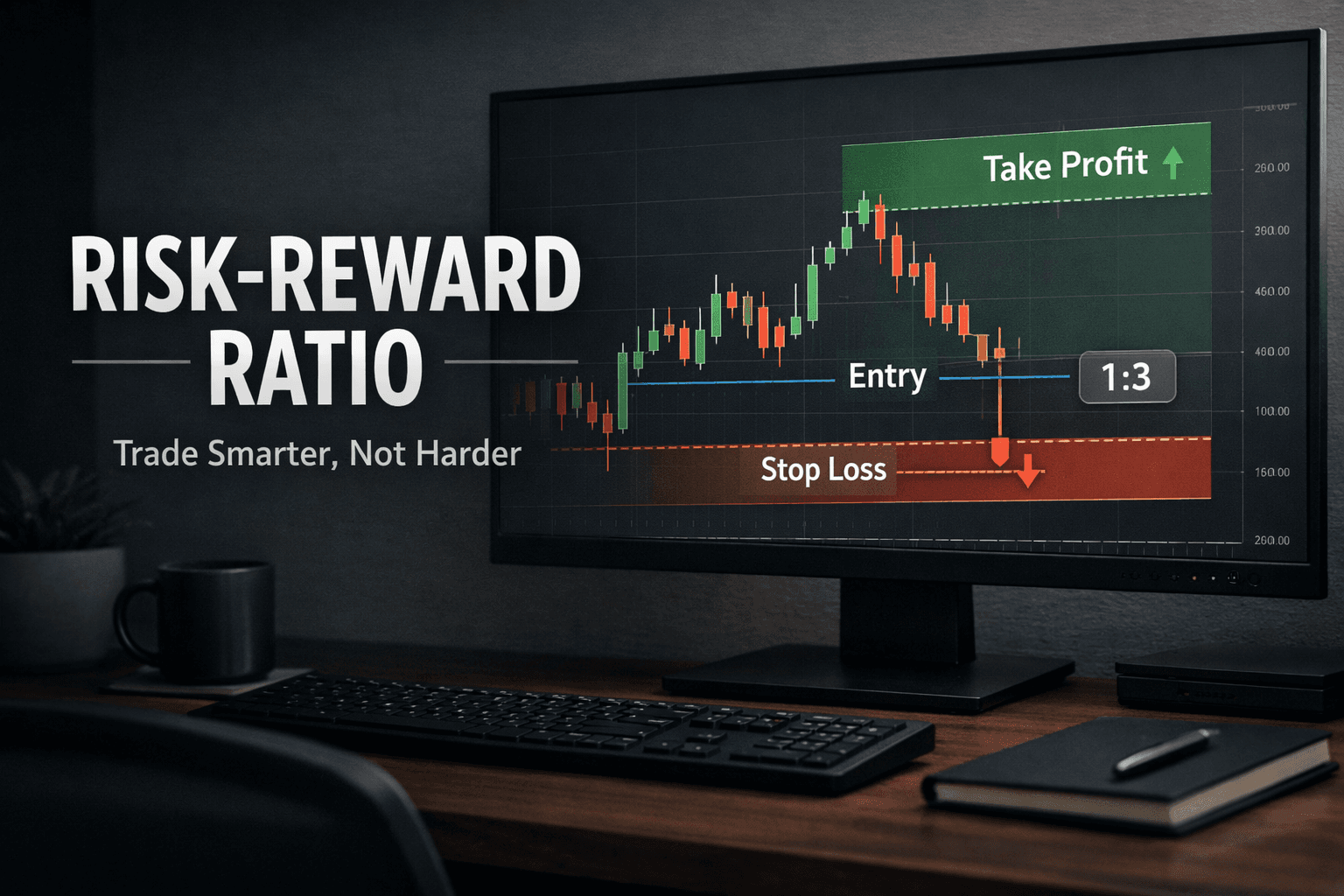
Trading Application: Your stop-loss and take-profit levels should be determined before you enter a trade, based on analysis and risk parameters—not emotional reactions to price movement. Just as NASA didn't decide during re-entry where parachutes should deploy, traders shouldn't determine exit points while money is on the line and emotions are elevated.
3. Communication Protocol During Critical Phases
During the six-minute communications blackout, Mission Control couldn't contact Orion. But this wasn't a failure—it was an expected, planned phenomenon. NASA had protocols for this period of uncertainty.
Trading Application: Major market events (FOMC announcements, earnings releases, geopolitical shocks) create similar "blackout periods" where information is unclear or contradictory. Professional traders establish protocols for these periods:
- Reduced position sizes before major announcements
- Predetermined rules about whether to hold through events
- No impulsive trading based on initial headlines
Trust your preparation during uncertainty rather than making reactive decisions.
4. The Handover Principle
At 7:15 p.m. EDT, Orion completed its handover from NASA's Deep Space Network to the Near Space Network's Tracking and Data Relay Satellite system. This ensured continuous communications during the critical final phase.
Trading Application: Successful trading operations implement systematic handovers:
- Transitioning from pre-market analysis to live trading
- Shifting from technical to fundamental focus as new data releases
- Moving from active management to letting stop-losses handle positions overnight
Each phase has different requirements, tools, and decision-making processes. The key is smooth transitions without gaps in coverage or discipline.
The Psychology of High-Stakes Decision Making
The Artemis II astronauts trained extensively, but during re-entry, they were essentially passengers trusting the systems, procedures, and planning that preceded the moment. They couldn't manually adjust their trajectory through the atmosphere.
The Trader's Parallel: Once you're in a trade, your success largely depends on the quality of your pre-trade analysis and planning. Trying to "manually adjust" based on real-time emotion usually degrades rather than improves outcomes.
Trust Your Process, Not Your Impulses
Consider Reid Wiseman, Victor Glover, Christina Koch, and Jeremy Hansen during those six minutes of communications blackout. They couldn't second-guess the trajectory or call for adjustments. They had to trust:
- Years of engineering calculations
- Months of training and simulation
- Proven systems from previous missions
- The capabilities of their support team
Traders face similar moments when they must resist the urge to override their system because a position moves against them or when they're tempted to adjust stops during volatility. The professionals trust their tested methodology over momentary impulses.
Economic Ripples: The Broader Market Impact
The successful Artemis II mission has immediate implications for financial markets:
Space Economy Growth
The mission's success validates NASA's Artemis program architecture, which includes collaborations with commercial partners like SpaceX, Blue Origin, and aerospace contractors. This success:
- Strengthens the investment thesis for the space economy, projected to reach $1.8 trillion by 2035
- Validates billions in R&D investment across aerospace companies
- Accelerates timelines for Artemis III (lunar landing) and commercial lunar activities
- Demonstrates technology that will eventually transfer to commercial applications
For Traders: The aerospace and defense sector (tickers like LMT, NOC, BA, RTX) often responds to major NASA milestones. More broadly, successful government-funded R&D programs create opportunities throughout the supply chain—from advanced materials to computing systems.
Technology Transfer to Financial Markets
Space mission technology historically transfers to financial applications:
-
Communications Systems: The satellite handover technology ensuring Artemis II's continuous communications has parallels in high-frequency trading infrastructure requiring microsecond-level precision and redundant pathways.
-
Real-Time Risk Management: NASA's ability to monitor thousands of parameters simultaneously and identify anomalies mirrors modern algorithmic trading systems that must detect and respond to market conditions in real-time.
-
Simulation and Testing: NASA's extensive use of digital twins and simulations to test every scenario reflects best practices in quantitative trading, where strategies undergo thousands of backtests and stress tests before deployment.
Preparing for Your Next "Mission": Practical Trading Applications
1. Create a Pre-Trade Checklist
NASA had extensive checklists for every mission phase. Develop your own:
- Market conditions suitable for this strategy?
- Risk parameters calculated and stop-loss set?
- Position size appropriate for account risk tolerance?
- Economic calendar checked for potential disruptions?
- Contingency plan defined for adverse scenarios?
2. Simulate Before You Execute
Astronaut training includes hundreds of hours in simulators. Use demo accounts and paper trading to:
- Test new strategies without real capital at risk
- Practice execution during various market conditions
- Identify weaknesses in your process before they cost money
3. Document Everything
NASA's missions generate extensive documentation enabling post-mission analysis and continuous improvement. Maintain detailed trading journals documenting:
- Pre-trade analysis and rationale
- Market conditions at entry
- Emotional state during the trade
- Execution quality
- What you learned regardless of profit/loss
This documentation transforms individual trades into a continuous learning program.
4. Embrace Planned Uncertainty
The six-minute communications blackout wasn't a bug—it was a feature. NASA planned for it and had protocols to handle it.
Identify the "blackout periods" in your trading:
- Overnight gaps when you can't monitor positions
- High-impact news where initial price action is often irrational
- Low-liquidity periods where stops might not fill at expected levels
Develop specific protocols for each, including potentially staying out entirely.
The Bigger Picture: Inspiration and Perspective
Beyond tactical lessons, Artemis II offers something traders often lose in the daily grind of markets: perspective.
These astronauts risked their lives to advance human knowledge and capability. They trained for years for this ten-day mission. They accepted risks that were carefully managed but never eliminated.
Trading, by comparison, involves managed financial risk in pursuit of financial returns. When a trade goes wrong, you haven't failed a mission that took years to plan—you've simply gathered data about a market hypothesis.
This perspective is liberating:
- A single losing trade isn't a catastrophic failure—it's expected variance
- Your trading "mission" isn't one trade but the long-term execution of a proven process
- Like space exploration, trading success comes from consistent application of tested methods, not spectacular individual outcomes
Conclusion: Excellence Through Preparation and Discipline
The successful splashdown of Artemis II at precisely 8:07 p.m. EDT on April 10, 2026, resulted from years of planning, rigorous testing, precise execution, and unwavering adherence to protocols during critical moments.
The same principles drive trading excellence:
- Prepare extensively before entering positions
- Define parameters based on analysis, not emotion
- Trust your process during uncertainty
- Execute precisely according to plan
- Learn continuously from every outcome
As Reid Wiseman, Victor Glover, Christina Koch, and Jeremy Hansen demonstrated during their journey around the Moon and back, success in high-stakes environments comes not from improvisation during critical moments, but from the quality of preparation that precedes them.
The next time you face a challenging trade or difficult market conditions, remember Orion's six-minute communications blackout—sometimes the most professional response is trusting your preparation rather than seeking to control every moment.
Your trading "splashdown" might not make headlines, but executed with the same precision, planning, and discipline that brought Artemis II safely home, it can be equally successful.